

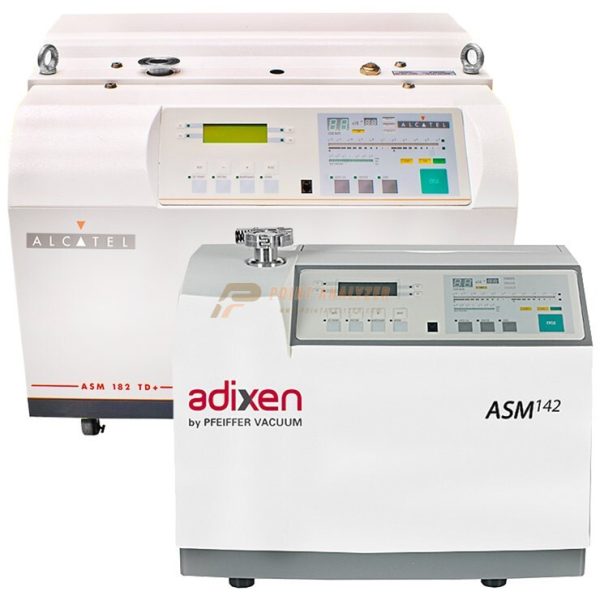

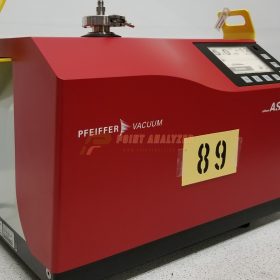
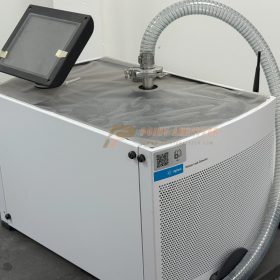
Up For Sale Pfeiffer Adixen ASM 142 Helium Leak Detector Second-hand Good condition and ready to use,
Product Overview
Helium Leak Testing Basics
Helium mass spectrometry, or helium leak testing, is a highly precise means of leak detection.
At the heart of helium leak testing is a complex piece of equipment called a helium mass spectrometer. Quite simply, this machine is used to analyze air samples (which are introduced into the machine via vacuum pumps) and provides a quantitative measurement of the amount of helium present in the sample. In practice, a “leak,” is identified by a rise in the level of helium being analyzed by the machine.
Performance Specifications
- Minimum Detectable Leak Rate (Vacuum Mode): 1 × 10⁻¹¹ mbar⋅L/s
- Minimum Detectable Leak Rate (Sniffer Mode): 1 × 10⁻⁸ mbar⋅L/s HVS Leak Detection
- Response Time (Vacuum Mode): < 0.5 seconds
- Helium Pumping Speed: 1.3 L/s AJVS Spec Sheet
- Roughing Capacity (Standard Model): 4.3 m³/h (Internal rotary vane pump)
- Roughing Capacity (Graph D+ Dry Model): 15 m³/h via an integrated Adixen ACP 15 Dry Pump
Physical & Utility Specifications
- Inlet Flange Connection: DN 25 ISO-KF AJVS Graph D+ Specs
- Maximum Inlet Pressure: 15 mbar (Before unit shifts from roughing to fine leak detection
- Power Configurations Available: 100–130 VAC or 200–240 VAC, Single Phase (50/60 Hz) AJVS Supply Page
- Dimensions: Roughly 510 × 445 × 410 mm (Tabletop unit layout)
- Weight: ≈ 52 kg (≈ 115 lbs) depending on backing pump configuration
Standard Software & Interface Features
- Display Layout: Multi-color analog bargraph coupled with digital mass flow readings.
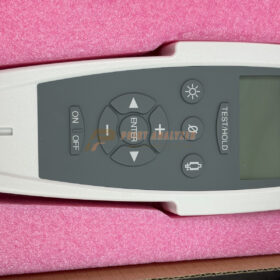
- Control Panel: Detachable operator interface panel for remote or integrated bench mounting.
- Communication Ports: RS-232 serial connection alongside analog input/output ports for automated system integration.
- Filament Arrangement: Dual-filament analyzer cell configuration to provide instant fallback protection if a







Ruth barbara –
So glad I bought this. The battery easily lasts through multiple long service calls.